· 3 min read
A Side Table for the Seat You Use Most
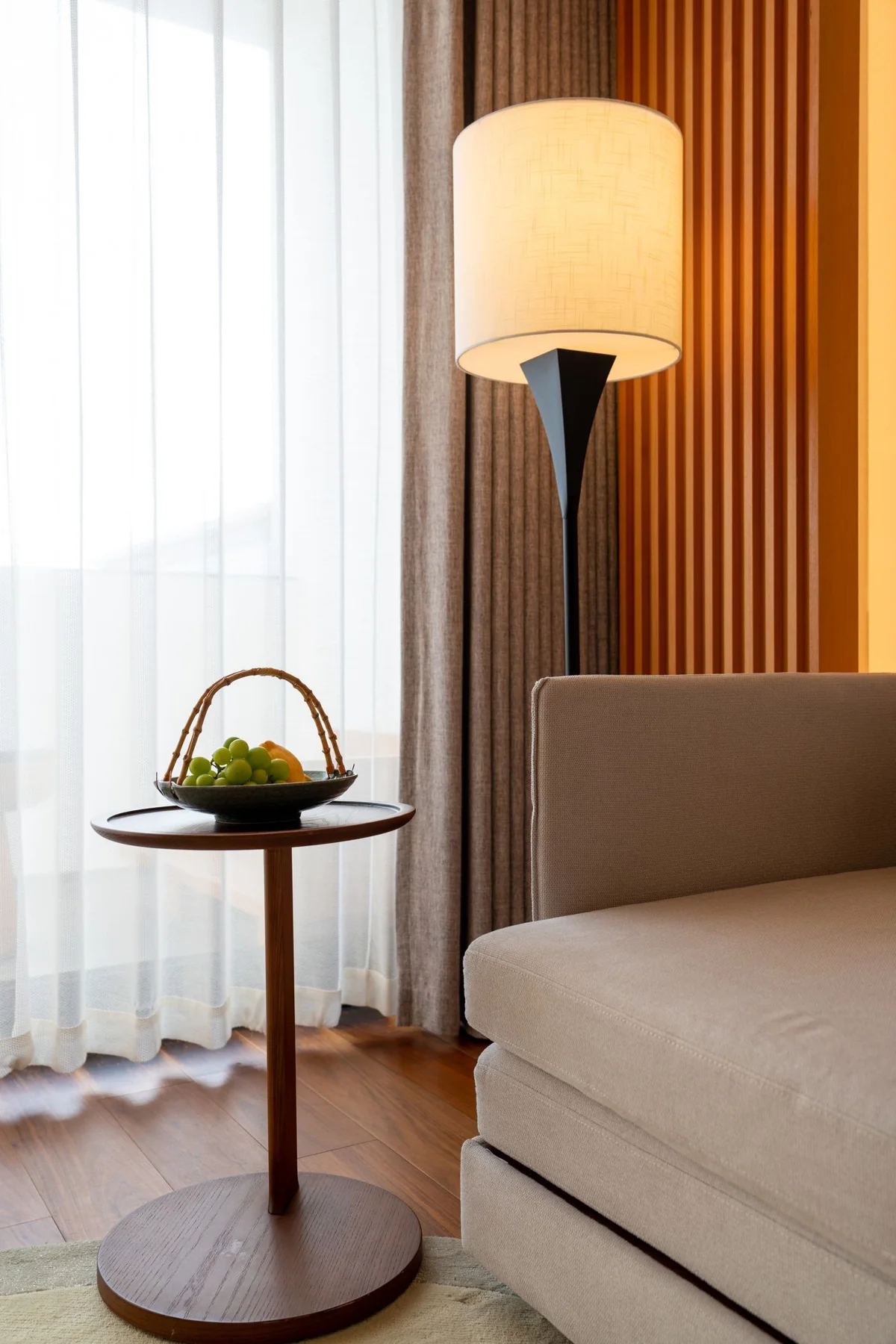
A side table is useful when an ordinary cup or book can be set down comfortably. Its relationship to the seat matters more than matching the sofa arm visually. Begin with the person seated in their usual position and the small group of objects that need a landing place. A modest surface can be enough when its role is clear, leaving the surrounding room easier to move through and maintain.
Try a stable existing surface
Borrow a suitable table where practical and sit naturally. Reach toward an empty cup and notice whether the chair arm blocks access. Compare position and height before buying. The surface should not require twisting or leaning across another person. Try a shared seat if relevant. Avoid unstable stacks or improvised supports as a fitting experiment; the test should remain simple and safe.
Measure the base as well as the top
Check legs, support footprint and clearances near furniture. A small top may stand on a wide base. If the design slides over a seat, measure actual under-furniture space and follow product requirements. Include rugs and uneven floors in the assessment. Use the table within its intended loading guidance. A decorative occasional surface should not be treated as a step or overloaded because it appears substantial.
Choose one main role
Decide whether the table mainly holds a drink, current reading or lamp. A broad lamp base can occupy the area the table was supposed to provide. Try the real objects rather than purchasing accessories to fill the top later. Clear space is useful. The arrangement does not need a permanent tray, vase and stack of books to look complete.
Test the route past it
Walk through with ordinary bags or laundry and check doors or drawers. Consider the seat occupied as well as empty. Rounded corners can help a compact area but do not remove the need for clearance and a stable design. If the table catches clothing or narrows an important path, change footprint or position. Convenience for one seat should not create a repeated obstacle for everyone passing.
Read finish-care requirements
Consider condensation, spills and warm objects according to the actual surface guidance. Use suitable protection where needed. A delicate finish can be enjoyable when maintenance is chosen knowingly. Keep enough room to clean without shifting a heavy decorative group. The table's everyday role includes care, not only the moment it is first styled beside the sofa.
Does it have to match other tables?
No. A simple material or scale relationship may be enough, and different surfaces can have different useful jobs. Live with the test location for several evenings if possible. The successful side table remains reachable, stable and manageable, giving everyday objects a clear place without requiring the room's walking routes to accommodate another purchase selected mainly for its appearance.
Related reading
Thoughtful Gifts for the Friend Who Loves Staying In, Coffee Cups Chosen for Hands, Shelves and Washing.
Our guides offer styling and buying criteria, rather than hands-on product test results. Always check the retailer’s current measurements, materials, prices and return terms before ordering.