· 5 min read
Autumn Outfits for Days When the Weather Changes

Autumn dressing often involves several climates in one day: a cool start, a warm patch at lunchtime and a noticeably colder journey home. Buying a heavier sweater does not always solve that problem. The more useful approach is to plan an outfit you can adjust.
These ideas suit ordinary days involving errands, commuting and relaxed plans. Local conditions vary, so treat the forecast, wind and time outdoors as your starting points. A seasonal label on a garment says less than its actual fabric and construction.
Read the whole forecast
Look beyond the highest temperature. Check the morning and evening conditions, expected rain and wind. Consider where you will spend the hours in between. An outfit for a long outdoor market visit needs more protection than one for a short walk between heated buildings.
Plan the outer layer first when rain is likely. Make sure it can close over the clothes beneath it and that the hood or umbrella arrangement works with your bag. A coat that is comfortable over a tee can feel restrictive over a thick cardigan.
Keep the footwear decision connected to the route. Avoid assuming a fashion boot is waterproof. Check the manufacturer’s description and care guidance, particularly when considering suede or other materials sensitive to wet conditions.
Formula one: jeans, a tee and an open layer
Straight jeans, a comfortable tee and a cardigan or overshirt create an adaptable everyday base. You can remove the middle layer during a warm afternoon without feeling as though the outfit is missing its main piece.
Choose a tee you are happy wearing on its own. Check the neckline, opacity and sleeve length before relying on it as a base. An old undershirt may work under a sweater but be less useful when that sweater comes off.
A shorter cardigan can sit neatly above the waistband, while a longer one offers more coverage. Neither is automatically better. Try the whole combination with your outerwear and bag.
Formula two: trousers with a light knit
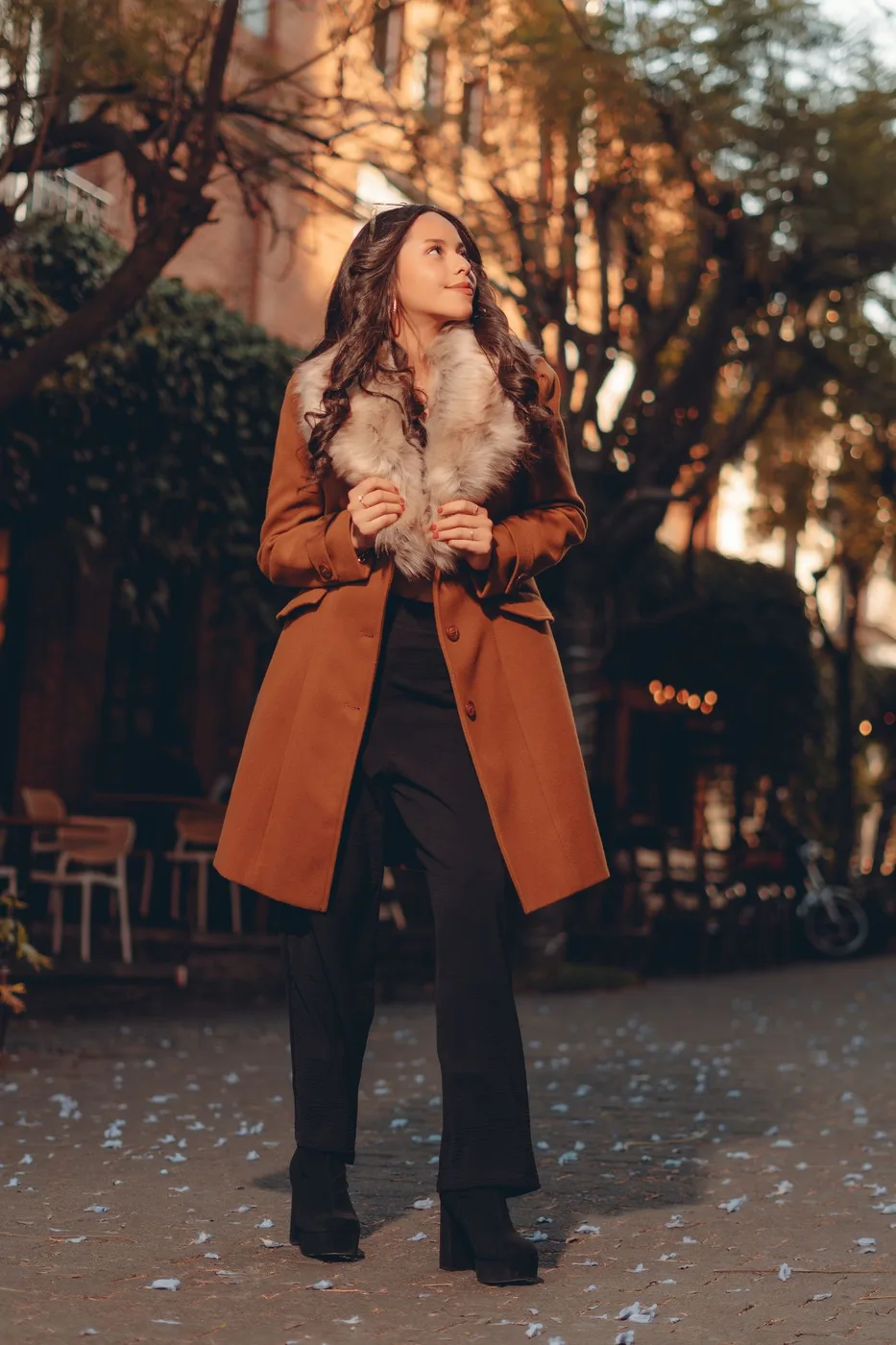
Relaxed trousers and a fine knit work when you need a little more polish. Add a suitable jacket for the morning, then carry it comfortably if the afternoon warms up. A compact scarf can add flexibility without requiring another heavy garment.
Pay attention to fabric weight. Very light summer trousers may feel out of step with a substantial wool look coat, though they can work indoors with a smooth knit. Our guide to relaxed tailored trousers covers ways to adapt the same pair across settings.
If you run warm, use an open-front layer over a simple top instead of a thick pullover. Easy adjustment is often more valuable than maximum insulation.
Formula three: a dress with a removable layer
An everyday dress can continue into autumn with a cardigan, jacket and appropriate shoes. Check that the neckline and sleeve shape fit under the layer without bunching. A puffed sleeve may be uncomfortable beneath a narrow coat armhole.
Use hosiery or socks when they suit the conditions and the footwear. Try them together at home. A shoe that fits comfortably with bare feet may feel tight with a thicker sock.
The tradeoff is that a lightweight dress can be less comfortable in wind. For a long day outdoors, trousers may be the simpler choice. Extending a summer piece is useful only when the resulting outfit suits the day.
Build a small weather kit
Keep the items that solve recurring problems near the door. Depending on your routine, that may mean a compact umbrella, a lighter scarf or a bag with a secure closure. Check their condition before the season turns.
Choose accessories for their function first. A scarf that cannot fit in your bag becomes another item to carry. A hat that blows away on your normal route is unlikely to become a dependable habit.
Use layering without bulk to check sleeve room and overlapping waistbands before adding another seasonal purchase.
Buy for the gap in your week
Before ordering a new coat or boot, identify the conditions your current wardrobe cannot handle. Do you lack a rain-friendly outer layer, or are you simply bored with the color of the one you own? Those are different decisions.
Check care, storage and likely wear frequency. A delicate coat can be appealing for occasional dinners but inconvenient for daily transport. A versatile everyday option does not have to meet every possible occasion; it should solve the most frequent problem well.
Frequently asked questions
Can I wear lighter colors in autumn?
Yes. Color does not determine warmth or weather protection. Focus on fabric, fit and practical care, particularly for pale hems and shoes on wet routes.
Do I need separate autumn and winter coats?
Not necessarily. Your climate and time outdoors decide that. A roomy coat with adjustable layers may cover several months, while a wider temperature range can justify different outerwear.
Our guides offer styling and buying criteria, rather than hands-on product test results. Always check the retailer’s current measurements, materials, prices and return terms before ordering.